
Mehrere Vorsichtsmaßnahmen während des Betriebs der kommerziellen Sägemehl-Trocknungsmaschine
Der kommerzielle Sägemehl-Trocknungsmaschine, also called Luftstromtrockner, is commonly used equipment for a 2-ton daily charcoal production line. Sawdust drying is essential for producing high-quality sawdust charcoal. What issues need to be paid attention to when using a sawdust dryer in order to maximize its working performance? Shuliy charcoal machine manufacturers are here to share with you useful tips.
Warum die Sägespäne-Trockner-Maschine zur Herstellung von Holzkohle verwenden?
Das Trocknen von Sägemehl ist der zweite Schritt in einer Kohleproduktionslinie. Feuchtigkeitsqualifizierte Rohstoffe, die mit der kommerziellen Sägemehl-Trocknungsmaschine verarbeitet werden, sind eine Voraussetzung für die Herstellung hochwertiger Kohle. Übermäßiges Trocknen von Rohstoffen wie Sägemehl kann zu Längsrissen in den extrudierten Formstäben führen und sogar die Formbriketts in Brand setzen.
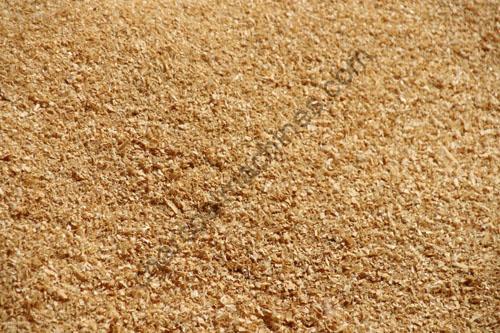
At this time, we can even mix the raw materials into sawdust. Excessive moisture in the raw materials usually causes transverse cracks in the forming rods, accompanied by back-blow air from the hopper, and sounds during sawdust extruder Maschine operation. In this way, raw materials with large moisture content need to be dried by a dryer.
Shuliy Sägespäne-Trockner-Maschine’Merkmale
A qualified Sägemehl Trockner Maschine has at least the following components: a fuel furnace, a lowering roller, a reduction motor, a number of pipes and elbows containing insulation layers, a fan, and a separator. The sawdust dryer also has certain requirements for the volume of raw materials and generally requires a particle diameter of less than 8mm.
But the size of the raw materials should not be too small, otherwise, the raw materials will easily burn in the pipeline. Most of our foreign customers’ charcoal processing plants use hot air duct dryers. The advantages of this commercial sawdust Trockner are direct heating, fast drying speed, foldable installation, and space-saving. The principle is to let the wet raw materials mix with the high-temperature airflow in the pipeline, and finally obtain the raw materials with the required moisture content through the separator.
Keine Kommentare.