
锯屑压块机的操作温度控制与电机选择方法
The electric sawdust briquette machine is a must-have for producing stick-shaped charcoal. It can produce different shapes of biomass rods by changing different extrusion dies, such as square, hollow cylindrical, hexagonal, etc. In the years that we 炭化机 manufacturers have dealt with foreign customers, we often encounter customers’ questions about the motor selection and operating temperature controlling of the sawdust extruder machine. Today, Shuliy machinery will focus on solving these problems here.
原材料的 特性,用于锯屑压块机的加工?
用于加工生物质棒(pini-kay)的原料通常满足两个条件:1. 原料必须是细颗粒或粉末,粒径小于10毫米;2. 原料的含水量必须低于12%。

A large amount of waste from agriculture and forestry can be recycled and processed into pini-kay that can be carbonized, such as straw, rice husks, sawdust, tree branches, peanut shells, palm shells, etc. For larger materials, we need to use efficient wood grinder to crush them first. For materials with high moisture content, we should use a natural drying method or 锯末干燥机 机器 for drying.
锯屑压块机的电机选择和操作温度控制方法
- 电机选择方法
The sawdust stick making machine in the charcoal production line is mainly formed by pressing raw materials through high temperature and high pressure, so it plays a major role in the entire process of the charcoal production line. The biomass briquettes machine differs in configuration power.
一般来说,50型棒材制造机较为常用。电机通常配备15千瓦的电机,但也有一些配备18.5千瓦的。哪个更好?因为棒材制造机由电机带动减速机驱动,使用节能高效的设备时,所需功率较少。
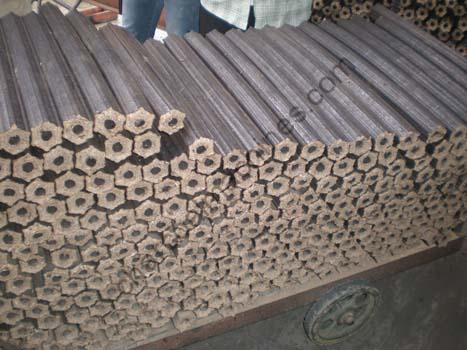
- 操作温度控制方法
The temperature of the forming cylinder of the pini-kay making equipment is usually controlled by 260 ℃ -300 ℃. Temperature regulation depends first on raw materials. First of all, our intention to warm the raw materials is to soften the lignin in the raw materials and increase the viscosity for high-pressure molding.
如果温度过高,原料会过度软化,虽然生产速度快,但产品硬度不足;如果温度过低,原料粘度差,产品质量也不好,容易出现故障和裂缝。因此,我们需要反复探索适合制作生物质压块的温度范围。
Generally speaking, the temperature for making bamboo briquettes is relatively low, and it is better to hold it at 260 ℃ -300 ℃. The straw and rice husk can be selected from 300 ℃ -320 ℃. Of course, the choice of temperature must also consider the practical water content of the raw materials. Using the same raw material to make briquettes by the 锯末压块机, the processing temperature is also different, which requires the operator’s sensitive grasp.
暂无评论。